
Concrete Paving Slab Support
Our concrete slab support section provides guidance to help you achieve the best possible results when selecting, installing and maintaining your paving. Manufactured in accordance with British Standards and using naturally sourced materials, our slabs are designed for durability and visual appeal, but may display natural variations and characteristics.
The information below explains these features, along with practical advice on installation, tolerances, and aftercare, to help you deliver a high-quality, long-lasting finish.
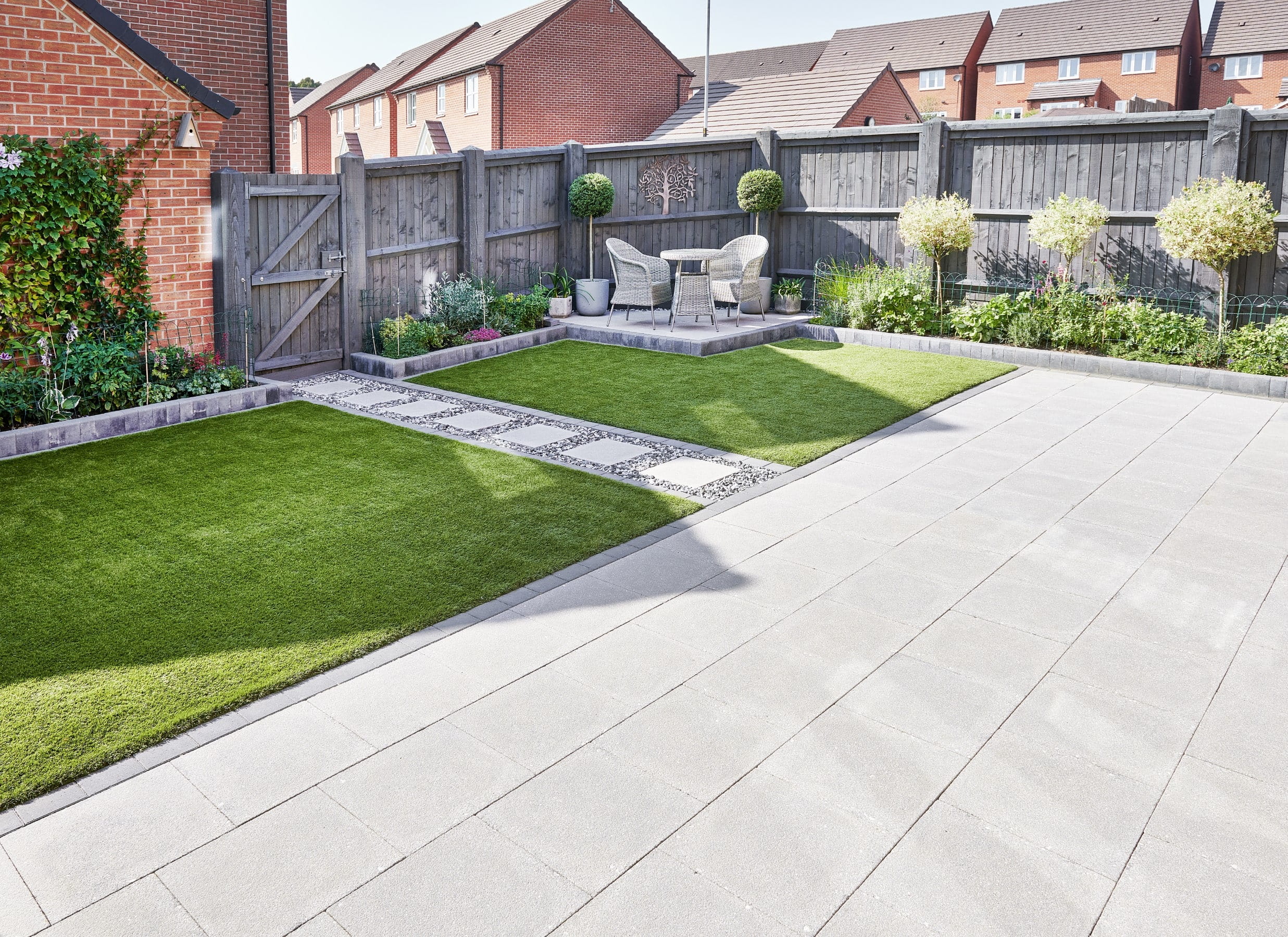
Brett Landscaping specialises in the production of paving products known for their exceptional aesthetics and durability. These products are manufactured in batches using naturally sourced raw materials, including aggregates, pigments, and cement. Some products undergo additional processes like shot blasting or surface grinding to achieve their final appearance.While we have implemented various factory procedures to control shade, colour, and texture within and between batches, we cannot guarantee absolute consistency. This is because of the inherent nature of the materials used and the secondary processes involved. Therefore, slight variations in the finished products are considered normal both within and between batches. In fact, these variations contribute to the character and natural beauty of the products. With our economy paving range, face finishes may vary.
To ensure the best possible result, we recommend following the following guidelines to evenly distribute any slight variations in shade, colour, and texture over a larger area:
- Whenever possible, complete an entire area of paving, retaining wall, or building using products from the same batch. Verify the batch code label displayed on the packs to ensure consistency.
- Thoroughly mix products from a minimum of three packs, regardless of the project size.
- In cases where using products from the same batch is not possible, it is crucial to minimise potential colour banding or shading. Always mix products from a minimum of three packs concurrently, with some overlap between deliveries or batches.
- Thoroughly mixing products from a minimum of three packs is particularly important when installing single colours like Red, Buff, Natural, and Charcoal.
- It is advisable to order all products at the same time, especially when purchasing larger quantities.
- Please note that the colour of new products may naturally vary compared to those that have been installed for a period of time, as weathering occurs.
- The colour illustrations provided are as accurate as the printing process allows. For a more precise colour match, refer to actual product samples that can be provided.
- The colours and textures depicted in illustrations are representations and should not be expected to be an exact match.
- By following these recommendations, you can achieve a visually pleasing and harmonious result, embracing the inherent variations that contribute to the unique appeal of our products.
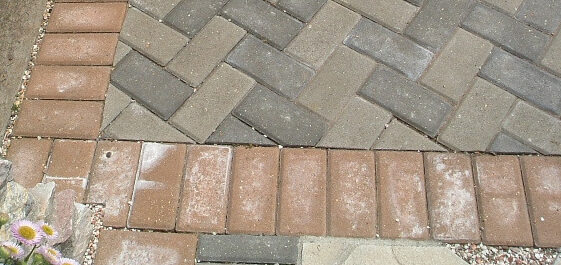
Efflorescence is a natural occurrence that can happen during the manufacturing and curing process of concrete products. This happens when a complex chemical reaction takes place between the cement, water, and carbon dioxide. It is a phenomenon that affects concrete products worldwide and is not specific to any one manufacturer. It’s important to note that efflorescence is a temporary occurrence and is not harmful to the product, people, or pets.
Typically, it can take up to 12 months for efflorescence to dissipate, although it may take longer in some cases. Please note that efflorescence is not a product defect. In the event that efflorescence occurs, it may temporarily obscure the colour of the product, but it will eventually be washed away by rain and natural weathering.
Please note that efflorescence is not a product defect and as such, Brett Landscaping does not offer product replacements for efflorescence. Therefore, we advise that you allow nature to take its course and the efflorescence to naturally dissipate.
All Brett Landscaping products are carefully inspected through the production process up to and including loading onto the delivery vehicle. Any defects must be reported without delay. If your product has arrived broken please contact our Customer Service team on 0345 60 80 577 who will be in touch to quickly resolve this.
Important: If products are installed despite clear defects that were noticeable before installation, the installer will be held accountable for all expenses associated with resolving the problem.
Brett Landscaping manufactures and tests all of their concrete paving flags in strict accordance with the relevant British Standards, BS EN 1339:2003.
Whilst it is extremely rare, due to the nature of manufacturing concrete products and even with the most modern techniques and factory inspections, the occasional flag with a minor surface imperfection may occur. They are usually identified and removed at the factory; however, on occasion, they may not be identified during inspection and may make their way to our customers. In the vast majority of cases, any products which have a minor surface imperfection will be identified during installation, which means they can simply be set aside and used for a cut piece. If you receive more than the industry standard of 2-5% of the total quantity ordered with surface imperfections, do not install them. Set them aside for inspection by a Brett Landscaping representative. Please contact your supplier for advice.
Before the jointing material is added, it is good practice for the installer to complete a final inspection and carry out any corrective action by removing any products with surface imperfections they may have missed during the installation.
Cracks – Brett Landscaping manufactures and tests their paving slabs in accordance with the latest standards, which greatly reduces the occurrence of cracks after installation. Most cracks that appear post-installation are rarely related to product quality.
- For bound installations (on a mortar bed with 6-10mm mortar joints) recommended for wet cast slabs, hairline cracks may occur if the bedding and jointing mortar are too strong, causing stress on the slabs. For more information on bound installation methods, please see our step by step guidelines for guidance on how to install wet cast paving as a patio.
- Another possible cause is the absence of movement or expansion joints, which are necessary in certain applications.
- In extremely rare cases, on-site handling or installation issues can also lead to in-situ cracks.
- Cosmetic hairline cracks measuring 1mm are generally considered acceptable and do not require replacement for structural reasons unless they pose a safety risk to users. If replacement of a cracked flag becomes necessary, it can be easily removed and replaced.
Chips – For unbound installations (on a sand bed with sand joints) recommended for hydraulically pressed slabs, chips can occur when installed directly next to each other, known as butt jointing. To reduce chipping, flags should have a 2-5mm close joint. Chipping can also happen when cut pieces are forced into place or when joints aren’t filled properly with kiln-dried jointing sand. If jointing material is removed during cleaning, it should be replaced promptly to prevent chipping. the sand joint 2-5mm and sand bed 30mm is an unbound process only suitable for Hydraulically presses slabs. Please see our step by step guidelines for guidance on how to install hydraulically pressed paving as a patio.
Important: If products are installed despite clear defects that were noticeable before installation, the installer will be held accountable for all expenses associated with resolving the problem.
Brett Landscaping manufactures and tests all of their Concrete Paving Flags in strict accordance with the relevant British Standards, BS EN 1339:2003.
Within this standard, there are certain allowed dimensional tolerances for concrete flags. These tolerances permit variations of + or – 2mm in length and width, and + or – 3mm in thickness. As long as the flags fall within these tolerances, they meet the criteria outlined in the standard and are suitable for their intended purpose.
During the inspection process at the factory, slabs are measured using verniers, which ensures accurate measurements. It is important to note that using a tape measure or ruler may not provide precise measurements. These slight tolerance variations may become noticeable when installing flags tightly together with butt joints. Butt jointing refers to placing adjacent flags in direct contact without any joint space. This method prevents the entry of jointing material and makes it more challenging to achieve straight lines, as there is no opportunity to adjust for minor variations in manufacturing tolerances.
Brett Landscaping does not recommend butt jointing flags. Instead, flags should be installed with a joint width between 2-5mm, known as a close joint. There are a few reasons for this. Firstly, it allows for the application of jointing material which protects the edges from chipping. Secondly, the 2-5mm close joint enables installers to make slight adjustments to compensate for manufacturing tolerances, ensuring straight lines in the overall installation. Finally, it prevents the ingress of water into the joints causing differential curing.