-
- All
- British Standard
- Broadway Economy
- Chaucer
- Eclipse Porcelain
- Eden Limestone Porcelain
- Eden Sandstone Porcelain
- Elegante Quartz Porcelain
- GeoCeramica® Baltico Porcelain
- GeoCeramica® Fiordi Porcelain
- GeoCeramica® Impasto Porcelain
- Meltone
- Quorndon
- Rippled Limestone
- Riven Sandstone
- Tactile Paving
- Yorktone
- Pedestals
Are we cool?
The extreme heatwaves which have characterised the summer are creating a level of risk and damage to urban environments and infrastructure that had never previously been experienced in the UK before.
With periods of extreme heat likely to be a feature of future UK summers, consideration will need to be given to materials used for large scale paving and landscape design practice that can prevent housing estates becoming unwitting tinder boxes.
Cool thinking
Housebuilders will need to look at the materials that are used for landscaping and at the layout of new estates to find ways to minimise and manage the worst effects of extreme heat. There are already products available, and research underway on how to adapt to the changing nature of the climate at key parts of the year.
In the field of paving systems, while the majority of research and innovation has been focused on sustainable drainage and how to improve water management to mitigate large, unexpected volumes of water, there is also research underway focusing on how to keep paving cool and to reduce the negative impact of the Urban Heat Island effect.
Industry body Interpave has looked at ways in which Concrete Block Permeable Paving (CBPP), already in wide use and a well-established SuDS technique can be harnessed to keep paving cool during the driest points of the year.
The guiding principle is that porous pavements allow water to drain through rainstorms and evaporate during hot weather. Evaporation keeps the pavement cooler because heat is pulled out from the pavement during hot weather.
For these systems to be effective housebuilders and developers may need to specify a more sophisticated paving system and installation methods to harness the benefits. The aim is to keep a suitable volume of water, absorbed and attenuated within the paving voids. Additional interventions and flow control can be introduced to the system to create a ‘cooling zone’ at the base of the pavement during prolonged periods of dry weather, to supply a small reserve of water for evaporative cooling.
Housebuilders can work with SuDS design specialists and manufacturers to develop a dynamic paving system that can adapt to the climate by managing water during heavy downpours, but maintains a volume of water for cooling the pavement.
CBPP systems can be integrated with other green design measures such as draining planters and tree pits to use the excess irrigation for cooling.
Furthermore, concrete block paving is a better product for cool paving in comparison to conventional asphalt street surfaces often installed over the original road base. In locations where managing extreme heat is near the top of design challenges, there are some findings that UK housebuilders can apply.
In the city of Phoenix in Arizona, USA, where temperatures at the height of summer average 40°C, with minimal rainfall, the City of Phoenix Street Transportation Department and Office of Sustainability has been piloting a cool pavements programme since 2020. The one-year results, presented in September 2021, demonstrated that light coloured, reflective pavement surfaces will lower the temperature of the pavement considerably as the heat is reflected rather than absorbed, as occurs with other surface options.
Techniques developed to reduce the heat of highways in places such as Arizona in the United States are now to be found in use in projects across London, including at The Bridget Joyce Square, Australia Road project. Concrete block paving is also an easier product and system to use with layout alterations or reinstatements, reducing carbon footprint and whole life costs.
Brett Landscaping has a wide range of concrete block paving products that are light coloured and reflective, using a blend of specially sourced aggregates on the surface of each paving block to create a long-lasting finish. The Invicta range of products, available in four light colours including Pearl, Moonstone, Onyx and Citrine offer housebuilders a block paving system ideal for maintaining the kerb appeal of new houses, while also being able to effectively manage high volumes of traffic and everything the British weather can throw at it.
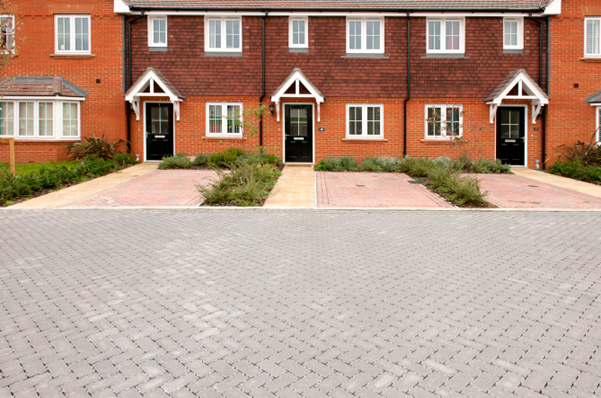
Omega Flow
Cool and clean
In addition to managing the weather, permeable paving systems can assist in reducing the harmful pollutants that leave large paving areas exposed during extreme heat. Research conducted in 2004 by the Construction Industry Research and Information Association has shown that permeable pavements can remove between 60% and 95% of suspended solids and up to 90% of hydrocarbons.
The research demonstrated that permeable paving systems are more effective in removing pollution from rainwater run-off than attenuation tanks. The same research also showed that permeable pavements can remove a wider range of pollutants than oil separators.
This means that permeable paving effectively cleans the water as it goes through the system. Tyre residue on road surfaces causes a considerable amount of plastics pollution which can end up in the drainage system along with hydrocarbons, detritus, silts, microplastics. All of these pollutants can be captured by permeable paving.
Larger particles are stopped at the surface, while finer materials, hydrocarbons and heavy metals are trapped as they penetrate the supporting layers. Organic materials, once trapped, break down over time, reducing the amount of contaminants that reach watercourses.
The result is that the water which infiltrates into the ground – or is drained to the next stage of a water management system, is of a much higher quality than if using an impermeable surface, relying on attenuation tanks.
With more extreme weather during all seasons expected to be the trend for UK climate over the coming decades, housebuilders and developers can turn to concrete block permeable paving as a useful tool to keep the carriageways, pathways and driveways of their estates cooler during extreme heat, productive in storing rainwater during heavy downpours and practical in assisting with the filtration of pollutants.
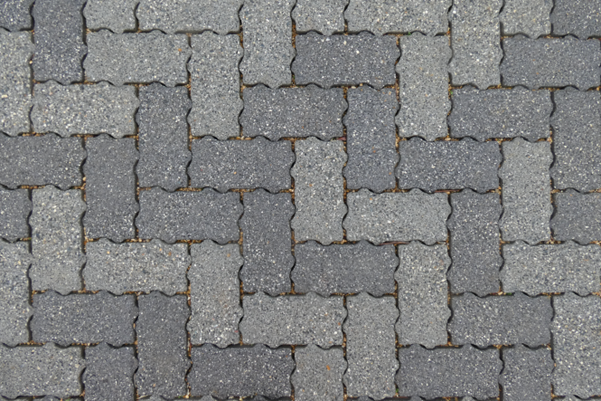
Lugano Flow Misty Grey & Graphite Grey
Related Products
Related Posts
23 JUL 2026
Expert Advice
An Update to Permeable Pavement Design Standards: What You Need to Know
Read Blog